

Team Building Trainer Malaysia: Trainer vs Facilitator
A practical HR guide to choosing the right person to lead, facilitate and debrief your corporate team building programme.
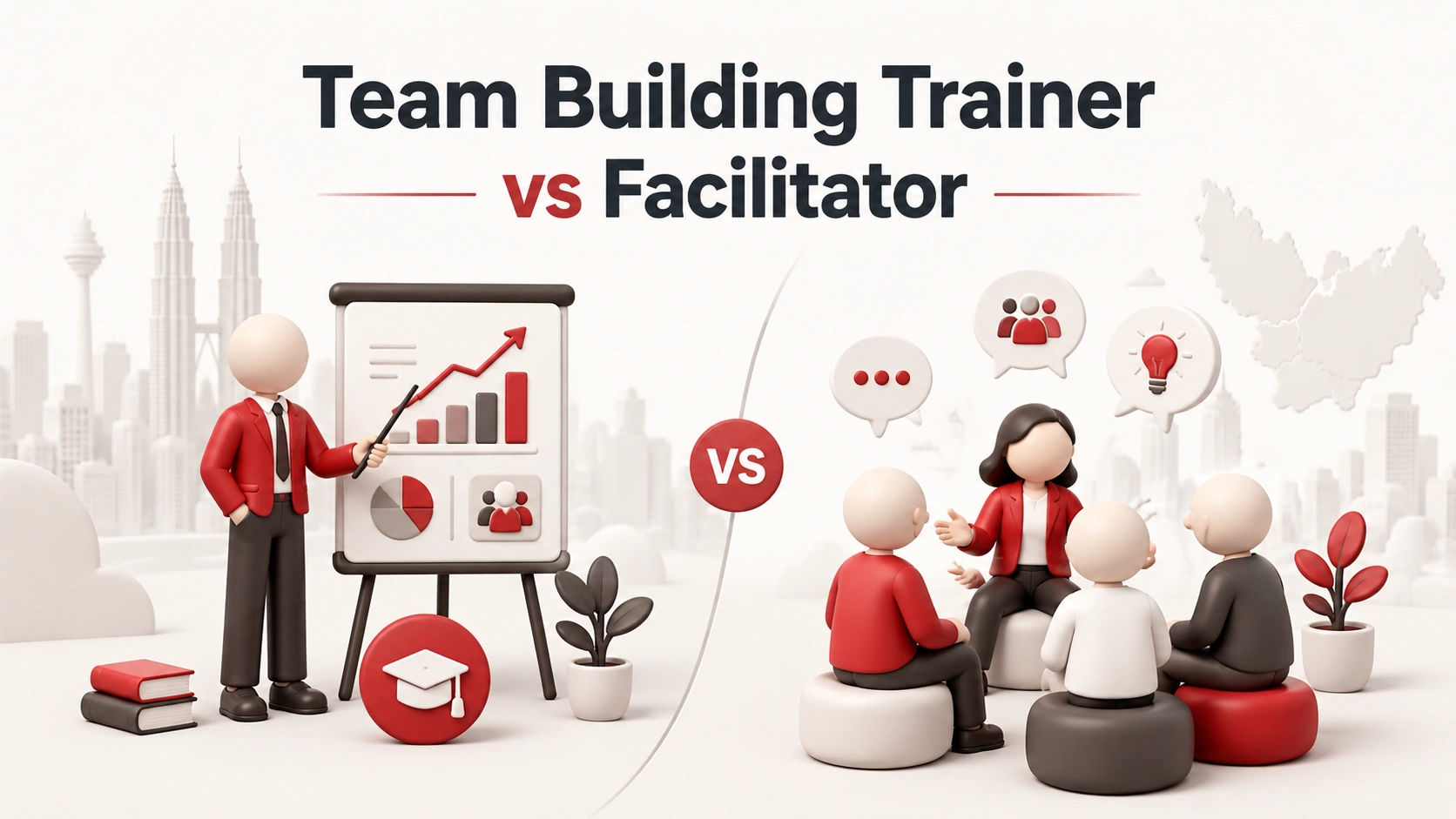
If you are searching for a team building trainer in Malaysia, one of the first decisions is understanding whether your programme actually needs a trainer, a facilitator, or someone who can perform both roles. The terms are often used together, but they are not exactly the same.
A trainer typically works from defined learning objectives and helps participants develop or reinforce specific knowledge, behaviours or skills. A facilitator focuses more on guiding participation, group interaction, reflection and discussion. In experiential team building, the same professional may move between both roles throughout the day.
For HR, Admin and L&D teams, the practical question is not which job title sounds better. It is whether the person leading the programme can connect your business objective, activity design, group dynamics and debrief into one coherent experience.
A team building trainer usually focuses on defined learning outcomes and structured development, while a team building facilitator guides participation, group dynamics, reflection and discussion. For many corporate programmes in Malaysia, the strongest delivery model combines both: structured objectives from a trainer with participant-led learning and debriefing from a facilitator.
Best when the programme needs clear learning objectives, skill development or structured content.
Best when participation, reflection, interaction and group dynamics are central to the outcome.
Experiential team building often blends instruction, activity facilitation and post-activity debriefing.
1. What Is a Team Building Trainer in Malaysia?
A team building trainer is a professional who helps turn a company objective into a structured learning experience rather than simply running games. Depending on the programme, the trainer may introduce concepts, set expectations, observe team behaviours, guide activities and connect the experience back to workplace situations.
For example, if management wants to improve cross-department communication, the trainer should understand that objective before the event. The activities can then be chosen or adapted to reveal communication patterns such as unclear instructions, assumptions, silo behaviour, listening gaps or weak coordination.
This is different from choosing an activity first and trying to attach a learning message afterwards. For corporate buyers, the stronger sequence is usually objective → participant profile → activity design → facilitation → debrief → workplace takeaway.
If your company is still deciding on the overall programme format, review GenBijak's corporate team building programme in KL and Malaysia before comparing trainer profiles.
2. Team Building Trainer vs Facilitator: What Is the Difference?
The main difference is emphasis: trainers are usually more content- and objective-led, while facilitators are more process- and participant-led. In practice, experienced corporate team building professionals often combine both approaches.
The Association for Talent Development describes trainers as professionals who deliver information and focus on learning objectives, while facilitators create discussion, ask questions and help participants contribute to the learning process. The International Association of Facilitators similarly describes facilitation as designing and guiding a process that helps a group think together and work toward outcomes.
| Area | Team Building Trainer | Team Building Facilitator | What HR Should Look For |
|---|---|---|---|
| Main focus | Learning objectives, knowledge, skills and behaviours | Participation, interaction, reflection and group process | Match the role to your business objective |
| Typical approach | Explains, teaches, frames and connects learning points | Questions, observes, guides and draws insights from participants | Avoid programmes that rely only on one-way presentation |
| During activities | Links the activity to targeted development outcomes | Manages group dynamics and encourages participation | Ask how quieter or resistant participants will be engaged |
| Debrief | Connects observations to learning objectives | Helps participants reflect, discuss and form their own insights | Ask to see an example of the debrief method |
| Best fit | Structured learning or behavioural development | Engagement, collaboration, reflection and group alignment | Many corporate programmes benefit from a blended role |
Trainer: Learning objectives, knowledge, skills and behaviours.
Facilitator: Participation, interaction, reflection and group process.
Trainer: Connects activities to targeted learning outcomes.
Facilitator: Manages participation, energy and group dynamics.
Trainer: Links observations to the intended development objective.
Facilitator: Helps participants discuss and discover insights together.
Many corporate team building programmes benefit from one person—or one delivery team—combining both roles.
The labels are not mutually exclusive. A trainer can use facilitation methods, and a facilitator may also introduce structured learning content.
3. What Does a Team Building Trainer Actually Do?
A good team building trainer contributes before, during and after the activities—not only when standing in front of participants with a microphone.
Before the programme
The trainer or programme team should understand the company objective, participant profile, expected headcount, language needs, management expectations, physical considerations and venue limitations. These details influence both the activity design and the facilitation style.
During the programme
The trainer establishes psychological and practical boundaries, explains activity objectives, watches group behaviour and adjusts the pace when necessary. With a large corporate group, this may also require assistant facilitators, station leaders or subgroup management so that participants do not spend too much time waiting.
After each major activity
The trainer helps participants connect what happened during the activity to real workplace situations. A communication challenge, for example, becomes more valuable when the group reflects on why messages were misunderstood, who took leadership, how decisions were made and what could be improved back at work.
4. When Is a Facilitator More Important Than a Trainer?
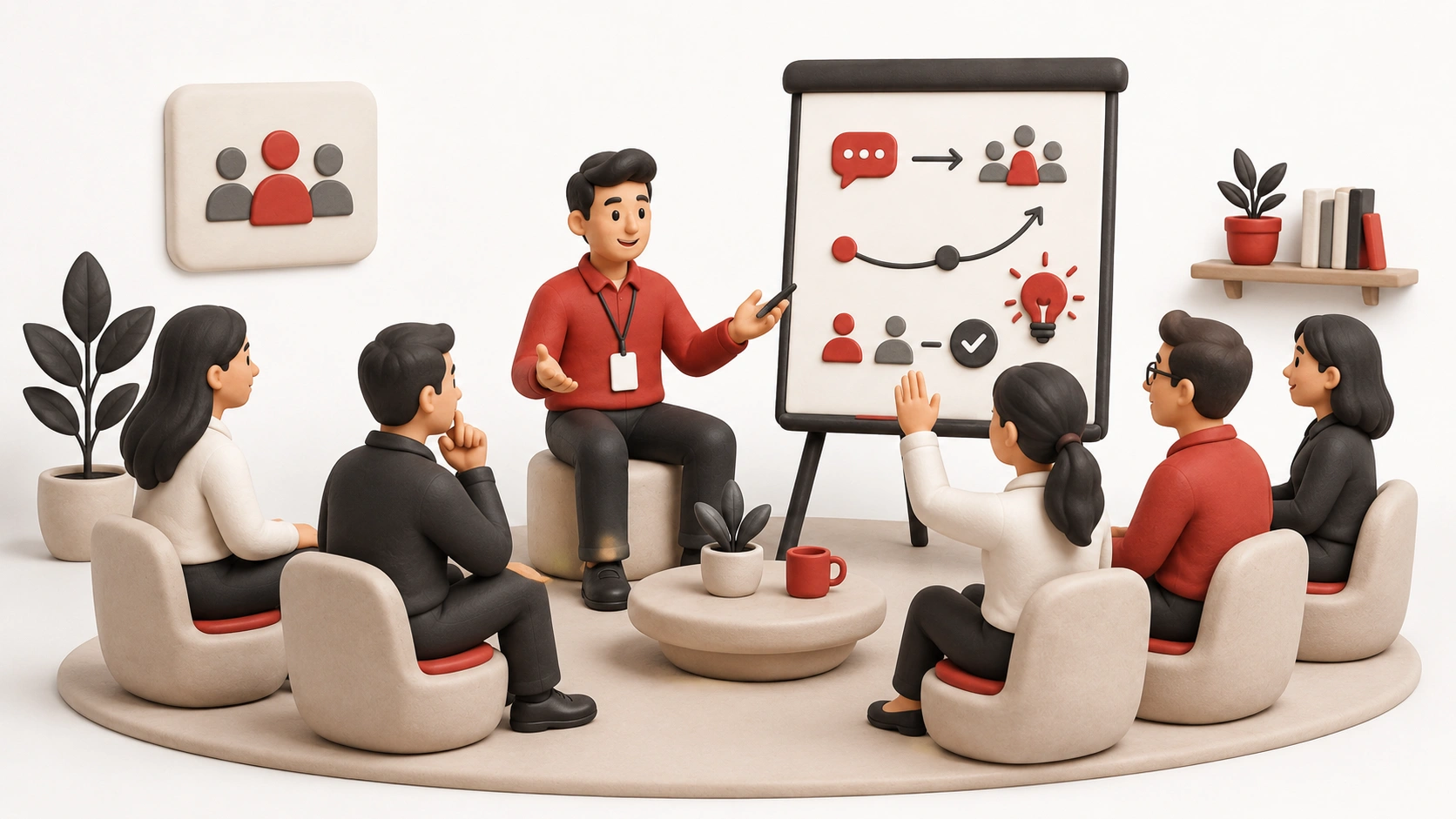
A facilitator becomes especially important when the value of the programme depends on participant interaction rather than content delivery. This includes objectives such as improving communication, building trust, reconnecting departments, encouraging reflection or helping teams discuss how they work together.
In these situations, the facilitator should not dominate every conversation. Instead, the role is to create a structure where participants can contribute, listen, test ideas, notice team behaviour and discuss what the experience means.
This learner-centred approach is one reason facilitation matters in experiential team building. It also explains why a programme can feel energetic and enjoyable while still having a clear business purpose.
5. What Should HR Check Before Appointing a Team Building Trainer?
HR should evaluate the trainer or facilitator against the programme objective, group size and delivery conditions—not only years of experience or the number of activities in the proposal.
Ask how the proposed activities connect to communication, leadership, collaboration, trust or another defined outcome.
Facilitating 20 participants is different from managing 100 or more. Ask about facilitator ratios, stations and subgroup flow.
A good answer should go beyond “we explain the moral of the game.” Look for structured reflection and workplace connection.
Consider participant age, job level, language, physical limitations, company culture and previous team building experience.
Ask how the delivery team handles bad weather, venue limitations, late arrivals, reduced time or last-minute headcount changes.
Clarify who communicates with the venue, manages registration, coordinates meals, controls timing and resolves on-ground issues.
If you are comparing companies rather than individual facilitators, GenBijak also has a separate guide on how to choose a team building company in KL. For quotation-stage checks, see the team building provider Malaysia HR quote checklist.
6. Where Do Logistics and Event Coordination Fit?
Trainer quality is only one part of a corporate team building experience. Someone also needs to coordinate the venue, participant flow, meals, transport, activity equipment, timing, weather backup and communication between stakeholders.
This is where the difference between an individual trainer and a full team building provider becomes important. An individual trainer may focus mainly on learning delivery, while a provider may combine programme design, facilitation and event coordination under one scope.
For HR teams with limited time, this matters because the programme can become fragmented when the trainer, venue, transport, meals and activity suppliers are all managed separately. A clear scope of responsibility reduces handover gaps and makes it easier to know who owns an issue on event day.
Explore GenBijak's team building programme options or review what can be included in a team building package in Malaysia.
7. What Should HR Know About Trainers and HRD Corp Claimable Programmes?
If HRD Corp claimable planning is part of your requirement, trainer and programme documentation should be checked against the current HRD Corp scheme before the event is confirmed as claimable.
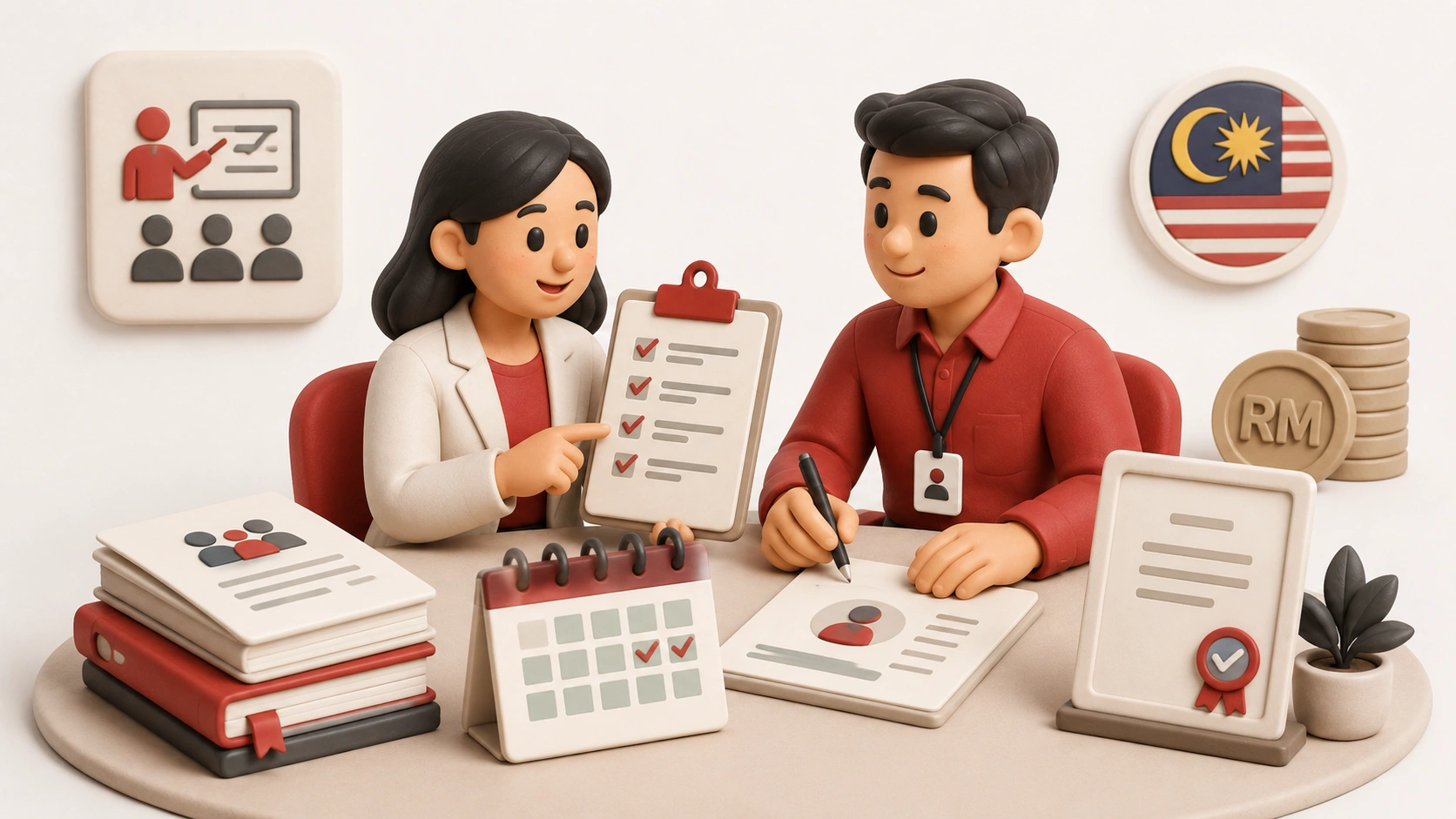
HRD Corp's current Claimable Courses information lists documents such as the quotation or invoice, training schedule or course content and trainer profile as part of the application process. Its programme-registration guidance also includes requirements relating to trainer competency and trainer documentation.
GenBijak can support HRD Corp claimable programme planning for eligible employers, subject to current HRD Corp requirements, programme approval, supporting documents and available levy balance. Claimability should not be treated as guaranteed.
Because HRD Corp requirements can change, HR teams should verify the current rules close to the application date. You can also review GenBijak's HRD claimable details before requesting a programme proposal.
8. How Can GenBijak Support a Corporate Team Building Programme?
GenBijak supports corporate team building planning by connecting the programme objective with activity planning, facilitation and practical event coordination. Programmes can be customised around factors such as headcount, duration, location, venue, team objective and budget.
This means HR does not need to begin by choosing a game. A better starting point is to share what is happening in the team and what management wants the programme to achieve. From there, the programme direction can be shaped around the people, environment and operational requirements.
For companies in Kuala Lumpur, Selangor, Klang Valley and selected locations across Malaysia, the next step is to prepare your preferred date, approximate headcount, location and objective before requesting a quotation.
9. Frequently Asked Questions
What is the difference between a team building trainer and facilitator?
A team building trainer usually works from defined learning objectives and may teach or reinforce specific knowledge, behaviours or skills. A facilitator focuses more on guiding participation, group interaction, reflection and discussion so participants can learn from the experience. In many corporate team building programmes, one professional may perform both roles.
Does every corporate team building programme need a trainer?
Not always. A trainer is more important when the programme has defined learning outcomes or development objectives. A facilitator may be sufficient when the main goal is guided participation, connection, communication or reflection. Many programmes use a blended trainer-facilitator role.
What should HR check before appointing a team building trainer in Malaysia?
HR should check whether the trainer or facilitator understands the programme objective, can manage the expected group size, can explain the activity flow and debrief approach, has an appropriate safety and contingency plan, and can work with the organiser on venue and logistics requirements.
Why is debriefing important in team building?
Debriefing helps participants connect an activity to workplace behaviours such as communication, trust, leadership, problem solving and collaboration. Without reflection, an activity can remain entertaining without producing a clear learning takeaway.
Can the same person be both trainer and facilitator?
Yes. In experiential corporate learning, a trainer may also use facilitation methods. The more important question for HR is whether the person can connect the programme objective, participant experience and debrief into a coherent learning flow.
Can team building in Malaysia be planned as an HRD Corp claimable programme?
Claimability depends on the current HRD Corp scheme, employer eligibility, programme approval, supporting documents and available levy balance. Employers should verify the latest requirements before confirming the programme as claimable.
References
- Association for Talent Development (ATD). Training & Facilitation Certificate: What is the difference between training and facilitation? View source
- International Association of Facilitators (IAF). About Facilitation. View source
- HRD Corp. HRD Corp Claimable Courses. View source
- HRD Corp. Programme Registration – HRD Corp Claimable Course. View source